Physician-scientist · Cardiac electrophysiologist
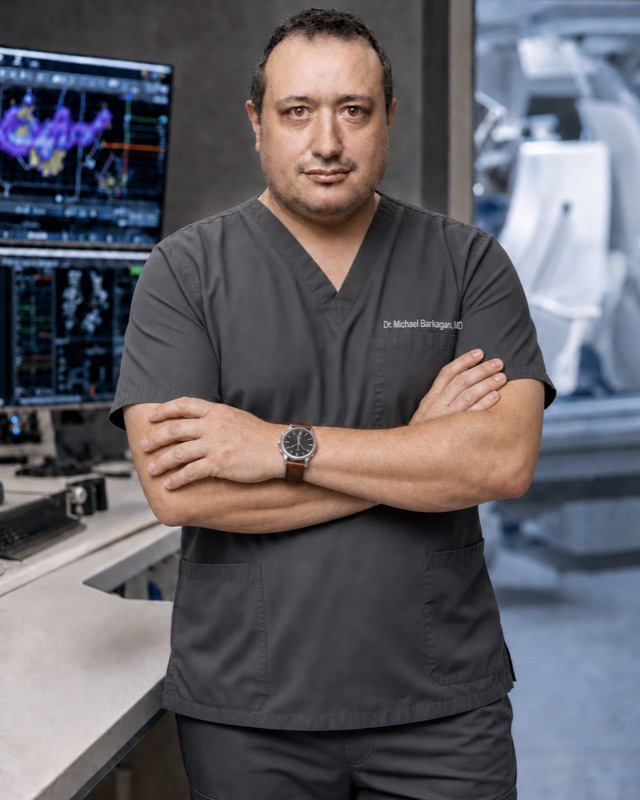
Dr. Michael Barkagan
Specialist in complex arrhythmia managementSenior clinical lecturer
Tel Aviv University School of Medicine
About
- Harvard-trained cardiac electrophysiologist:
- - Postdoctoral training at Harvard Medical School, Boston (2017-2019)
- - Clinical fellowship at Beth Israel Deaconess Medical Center, Boston (2019-2021)
- Attending electrophysiologist at Shamir Medical Center and Assuta Medical Center, Tel Aviv
- Internal Medicine and Cardiology training at TASMC (Ichilov)
- Scientist focused on arrhythmia mechanisms, mapping technologies and biophysics of catheter ablation
- Specialization in personalized management of complex arrhythmias and in advanced catheter ablation
Academic record
- 39Indexed publications
- 19h-index
- 1,514Citations
Figures as of , sourced from PubMed and Semantic Scholar.
Conditions and treatments
Conditions
What Dr. Barkagan treats
/01Atrial fibrillationAn irregular, often fast heartbeat, and the most common rhythm disorder in adults.
/02Atrial flutterA fast but organized rhythm traveling around a fixed circuit in the atria.
/03Supraventricular tachycardia (SVT)Palpitations or a racing heart from a fast rhythm arising above the ventricles: includes AVNRT, AVRT, and atrial tachycardia.
/04Premature beats and ventricular tachycardiaPremature ventricular and atrial beats, and ventricular tachycardia.
/05A slow heartbeat or pausesBradycardia and heart block.
/06Syncope (fainting)Syncope evaluation, and assessment of whether an arrhythmia is the cause.
/07Arrhythmias in heart failureTreatment of the electrical disorders of heart failure: improving cardiac function by treating the accompanying arrhythmias and by cardiac resynchronization (CRT). Conduction disease and ventricular tachycardia in structural heart disease.
Treatments
How they are treated
Catheter ablationTargeted treatment of the tissue where the arrhythmia originates or sustains itself, through a minimally invasive catheter procedure.
Repeat ablation for recurrent atrial fibrillationA separate group of patients return after a prior AF ablation with recurrent AF or with organized atrial tachycardias that arise in the upper-left chamber, often called atypical flutters.
Pacemakers and implantable defibrillatorsPacemaker implantation including conduction-system pacing and leadless pacemakers, implantable defibrillator (ICD), with device programming and remote monitoring.
Antiarrhythmic medicationAntiarrhythmic drugs are used to restore or maintain a normal heart rhythm.
Electrical cardioversionElectrical cardioversion (DCCV) is a short procedure that uses a synchronized electrical shock, under sedation, to restore a normal rhythm.
Electrophysiology studyAn electrophysiology (EP) study is a test that looks at how the heart's electrical system works from the inside.
Second opinion or consultationConsultation on the management of complex arrhythmias.
Booking and referrals
Appointments are booked through Assuta. Telephone 077-230-7258, Sunday to Thursday 08:30–17:00, Friday and holiday eves 08:30–12:00.
This website and the telephone line are not monitored for medical emergencies. In an emergency call 101 or go to the nearest emergency department.
Booking and the telephone line are in Hebrew.